During the development of my nature sound synthesizer, I started researching how other artists and sound designers use random processes to generate natural sounds. I wanted to understand how noise and algorithms could be used to create sounds such as wind, rain and waves without relying on pre-recorded audio.
One project that caught my attention was Weather Organ: A Sparse Stochastic Synthesizer in Faust (2018), developed by Mykle Hansen.
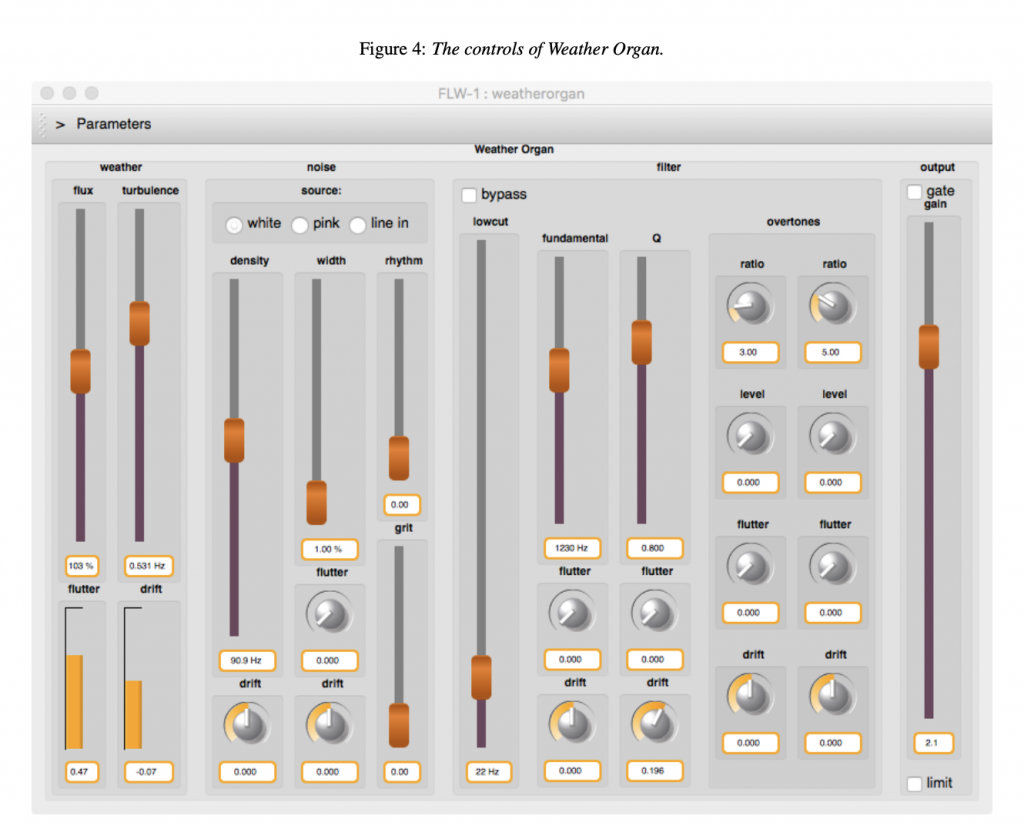
Weather Organ is a sound synthesizer created using the Faust programming language. It can generate different environmental sounds, including rain, wind, surf, fire and volcanic activity. Instead of playing recorded sounds, it uses noise generation, filters and random processes to create changing sound textures. What interested me most about this project was the way it uses randomness at different speeds to create natural-sounding environments.
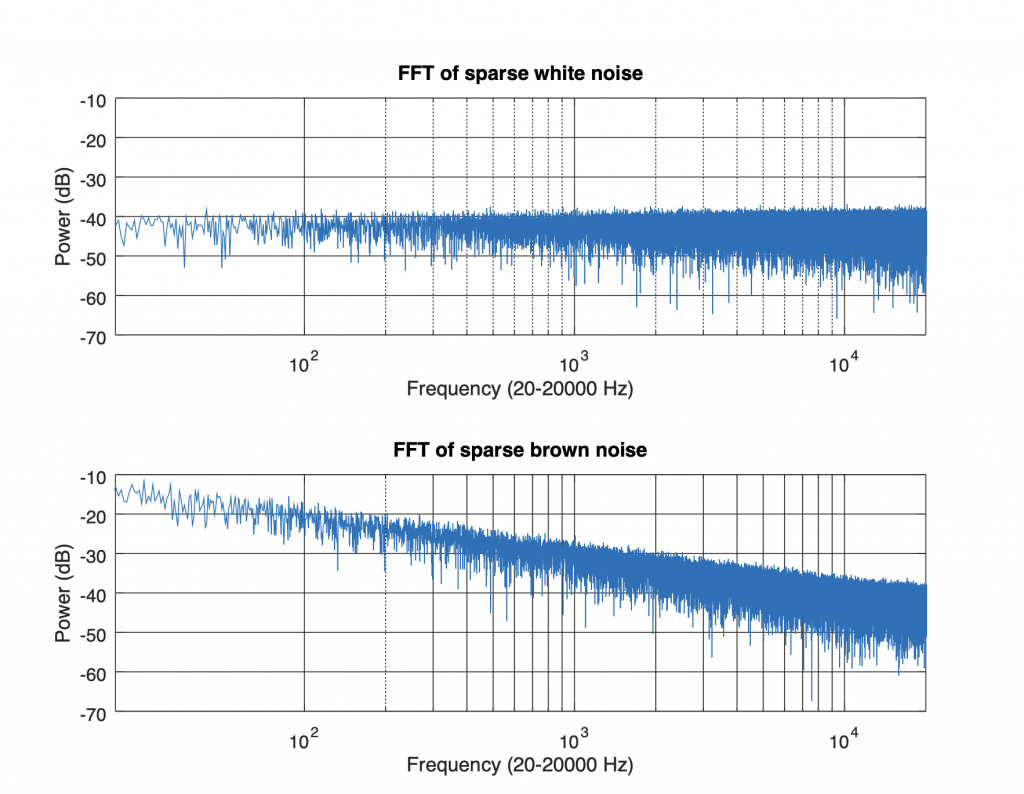
One of the main ideas in Weather Organ is Sparse Noise.
Normally, when we use a noise generator, it produces a continuous sound. However, sparse noise works differently. It produces short noise events with silent gaps between them.
For example, a continuous noise can create the sound of heavy rain, while sparse noise can create the impression of individual raindrops or light rain.
Hansen explains that the timing and distribution of small sound events can be important for making natural sounds recognisable. We do not always need to reproduce every detail of a real sound. Sometimes, the way sounds appear and disappear over time is enough to create a convincing impression.
I found this idea particularly interesting because rain is not simply continuous noise. It contains many individual impacts that happen at different times and with different intensities.
This made me think more about the relationship between sound density, timing and the perception of natural sounds.
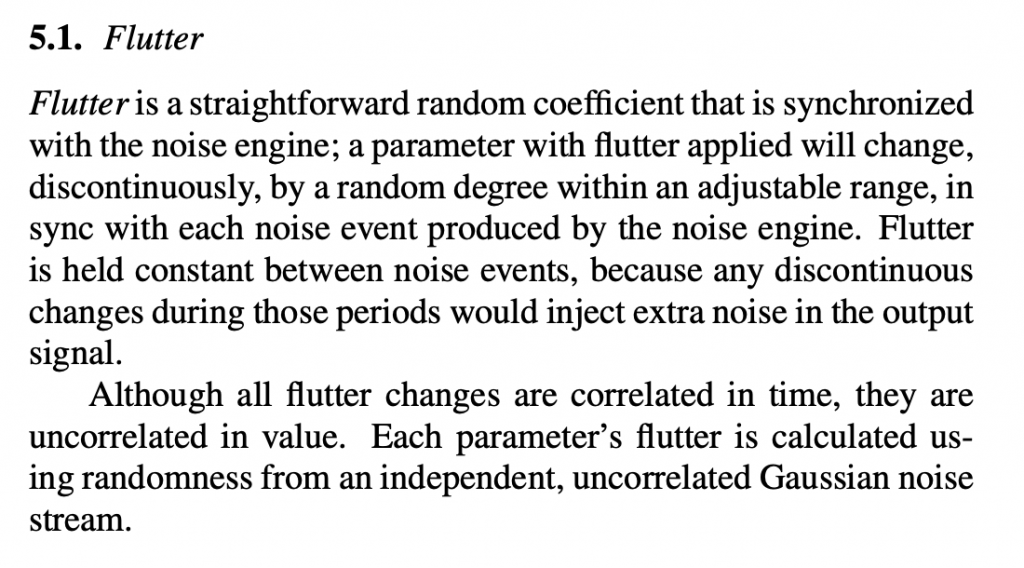
Another important part of Weather Organ is its use of two types of random variation: Flutter and Drift.
Flutter creates fast changes in parameters. In this system, the changes happen in time with each noise event. For example, the frequency or filter settings can change slightly whenever a new noise event appears.
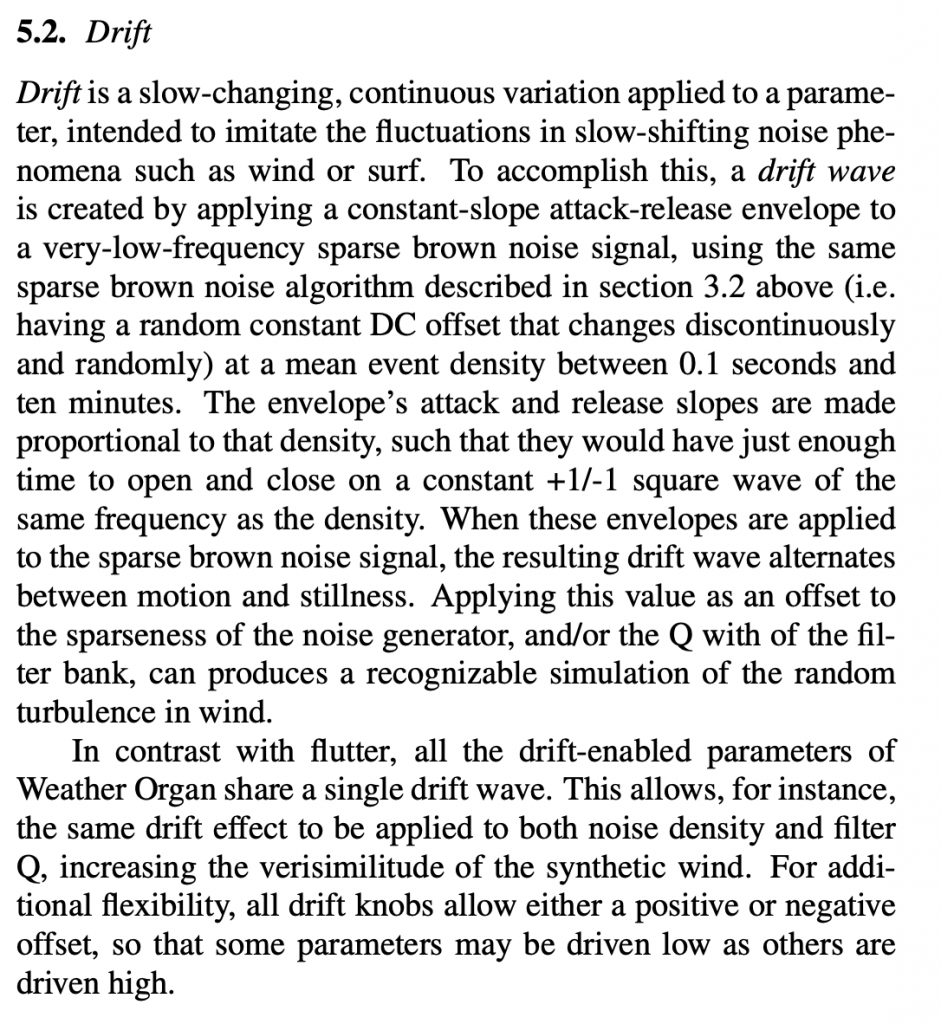
Drift works differently. It creates slow and continuous changes in sound parameters. Hansen uses this technique to simulate slowly changing natural phenomena, such as wind and ocean waves.
For example, the density of noise and the filter settings can change together over time. This creates a more complex and less predictable sound.
I found the difference between these two systems interesting. They show that natural sounds can change at different time scales. Some changes happen very quickly, while others develop slowly.
This research gave me some ideas for developing my own nature sound synthesizer. Before starting to build my wind and rain generators in Pure Data, I wanted to understand how different types of noise and random processes could be used to create natural sounds.
For the wind generator, I am interested in the idea of Drift. I want to explore how sound parameters, such as volume, filter frequency and noise density, can change slowly over time. This could help me create more natural wind movements instead of using a simple continuous noise.
For the rain generator, I am interested in Sparse Noise and Flutter. I want to experiment with individual noise events that appear at random intervals. By changing their density, duration and intensity, I hope to create different types of rainfall.
This research helped me understand that creating natural sounds is not only about choosing the right noise source or filter. The timing, density and variation of sound events are also important. I became particularly interested in how simple random processes can create complex sound textures. Different natural sounds have different patterns of change. For example, wind often develops through slow changes in intensity, while rain contains many individual sound events happening at different times.
Leave a Reply
You must be logged in to post a comment.