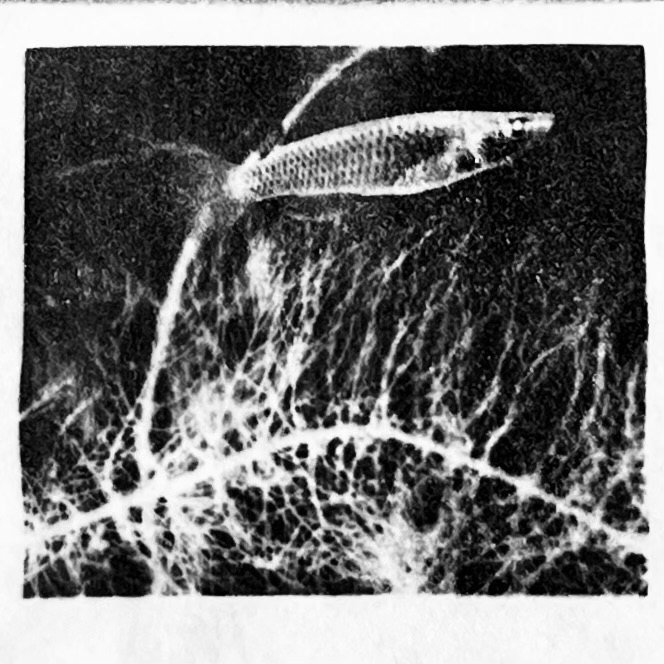
Project introduction
Through this project, I hope to explore how synthetic sound constructs people’s perception of the natural environment. I am very interested in natural sounds such as wind, rain, water flow and birdsong, and I also hope to try to use electronic synthesis technology to generate these sounds, instead of relying entirely on real environment recording.
My preliminary plan is to make an interactive sound device, so that the audience can control different sound parameters through the physical knob, and freely combine sounds to create their own natural sound scene. In the future, I hope to use Bela Mini to run sound programs and realize sound generation and control through Pure Data, so that the device doesn’t need to be connected to the computer continuously during normal use.
I don’t intend to simply pursue the perfect imitation of the real natural sound. On the contrary, I hope to explore how artificial sound is reminiscent of the natural environment, and how people will understand it when sound has obvious electronic synthesis characteristics.
Why did you choose this project?
I am very interested in the relationship between sound, technology and environmental perception. Natural sounds are often associated with specific spaces, emotions and memories. For example, the sound of the wind may remind people of open outdoor spaces, the sound of rain may bring a feeling of quiet, loneliness or familiar life, and the sound of birds often reminds people of forests, parks or other outdoor environments.
However, these associations don’t necessarily come entirely from the sound itself. They may also be influenced by personal life experience, cultural background, and the sound performance we have encountered in movies, games and music.
In movies and games, even if the audience cannot see a natural environment completely, the sound design can also imply the existence of this space. Birdsong, wind, rain and environmental reverberation in the distance can help the audience imagine the space outside the picture. This is especially noteworthy in the audio game A Blind Legend . This game does not rely on traditional visual images, but uses spatial audio and directional sound clues to help players understand and explore a fictional world. Although the game does not focus on natural sound scenes, it shows how sound conveys spatial information and guides the audience to build an environment in imagination.
This makes me think: if we don’t use real-environment recordings, but generate sound through synthesizers, can we produce a similar effect? If the sound of wind, water or birdsong is synthesized electronically, will the audience still connect them with nature? What sound characteristics will affect this perception? How much role will the audience’s own experience and expectations play?
Through this project, I hope to use synthesis and sound processing to explore the relationship between natural sound and artificial sound. I don’t want to simply copy the existing natural recordings, but I hope to study how synthetic sound constructs people’s perception of nature, and to what extent our perception of the natural environment can be shaped through sound design.
Cultural background
Nature is not just an objective environmental concept, but also an image that is often expressed through culture, art and media.
In movies, games and music, the natural environment is usually presented through selected and organized sounds. For example, soft wind, slow water flow and sparse birdsong may create a calm natural environment together; while processed low-frequency noise, irregular sound changes and strong spatial reverberation may make the same environment strange or uneasy.
These expressions made me start to think about whether the natural sound scene we understand is also affected by existing cultural experience. We may not simply judge that a sound belongs to nature after hearing it, but actively establish a connection between sound and the environment through familiar sound characteristics and past experience.
Timothy Morton critically discusses the concept of “nature” and its status in environmental aesthetics in Ecology Without Nature: Rethinking Environmental Aesthetics (Morton, 2007). His research provides me with a direction to think: the natural image we take for granted is not necessarily equivalent to the full complexity of the natural environment itself.
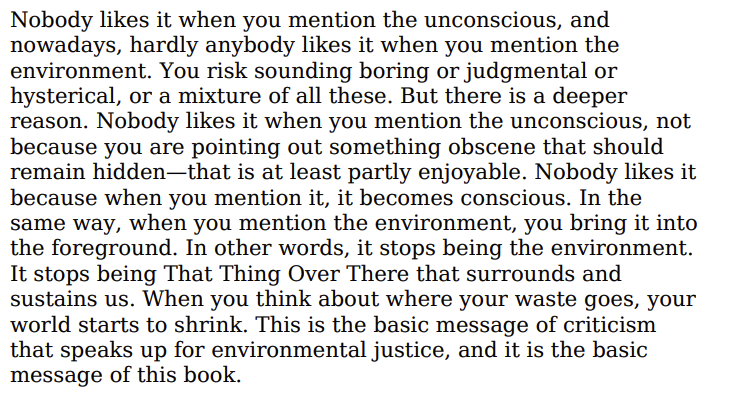
I don’t want to prove that nature is completely artificial, but I hope to explore through sound experiments whether artificial sound can create an auditory environment that is associated with nature but doesn‘t correspond to any real location.
Preliminary creative plan
At the beginning of the project, I planned to use Ableton Live to produce several basic synthetic natural sounds, including wind, rain, water flow and birdsong, and try to change their sound characteristics using noise, oscillator, filtering, modulation, pitch change and reverberation.
After completing the preliminary sound experiment, I hope to further explore how to integrate these sounds into a system that can be operated in real time. It is planned to use Pure Data and Bela Mini to achieve sound generation and physical knob control, and test whether the device can run independently without connecting to the computer continuously.
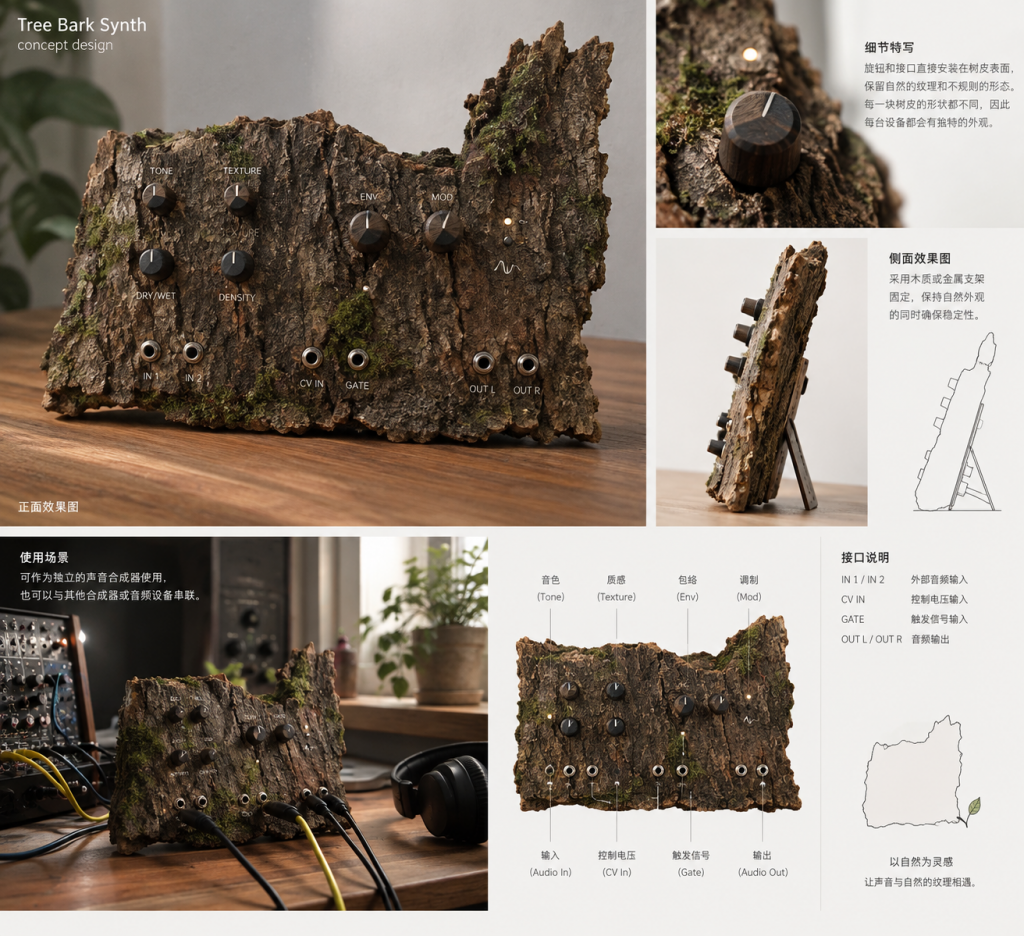
In the end, I hope to develop the work into an independent hardware synthesizer with natural sound scene synthesis as the core. It will generate sounds inspired by natural sounds such as wind, water, rain and birdsong through electronic synthesis, and allow users to adjust the tone, intensity, density and change of the sound through the physical knob. I hope it can be used as an independent sound generation device and can be connected with other synthesizers or audio devices, allowing users to integrate it into the existing music creation system and explore the interaction between artificially synthesized natural sounds and other sounds.
At this stage, I will give priority to sound experiments, synthesis methods, control methods and technical feasibility, rather than completing the final hardware shell immediately. Through preliminary research and prototype testing, I hope to determine which synthetic methods and parameter controls are best for generating sounds with a sense of nature, and explore how these sounds can form a constantly changing sound scene in the process of connecting and interacting with other devices.
Something like this,maybe:
Leave a Reply
You must be logged in to post a comment.