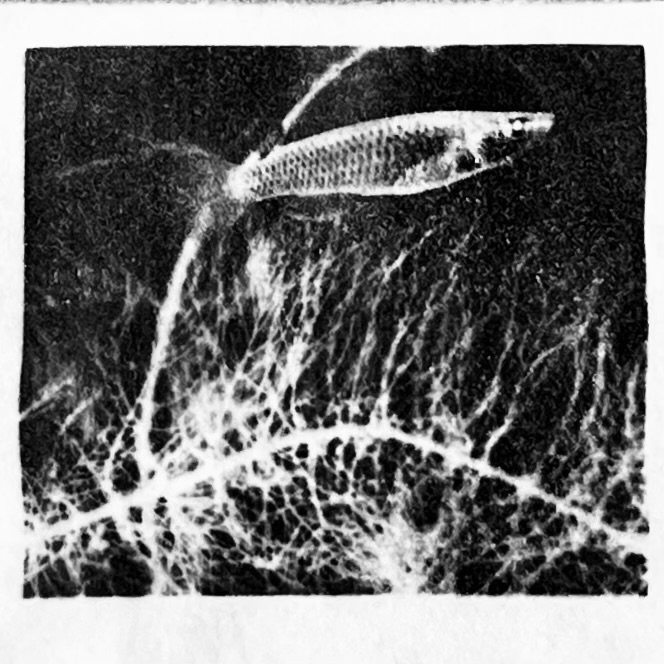
After completing the Rain, Wind and Birdsong generators, I began developing the fourth component of my Nature Soundscape Synthesizer: an Insect Sound Generator. For this project, I used Designing Sound as a learning resource to explore different approaches to synthesising insect and animal sounds in Pure Data (Pd).
Rather than creating a single continuous insect ambience, I wanted to build a collection of different sound generators that could represent different biological sound characteristics. The final patch contains five individual sound generators: Chirper, Cicada, Cricket, Frog and Rattler. Although they produce different types of sounds, I wanted them to function as parts of one larger sound system.
During the development of this project, I used Andy Farnell’s Designing Sound (2010) as an important learning resource, particularly Chapter 50, Practical 27: Insects (pp. 557–564).
This chapter helped me understand that synthesising biological sounds involves more than simply generating frequencies that resemble an insect. It is important to understand the physical mechanisms behind how these sounds are produced. Farnell explores insect sounds by examining their acoustic structures at different levels. This includes the shape of individual sound waves, the organisation of repeated sound events, and larger patterns of behaviour, such as the frequency, duration and intervals of calls.
This approach changed the way I thought about biological sound synthesis. Instead of focusing only on whether a sound resembles a particular insect, I began to consider how the sound is produced and how individual sound events are organised over time. The discussion of cricket sounds was particularly interesting to me. Farnell analyses the waveform and frequency characteristics of cricket calls, showing how a single call can consist of multiple short pulses arranged in repeated patterns. He explores the use of pulse generators and resonant filters as a way of modelling these acoustic characteristics.
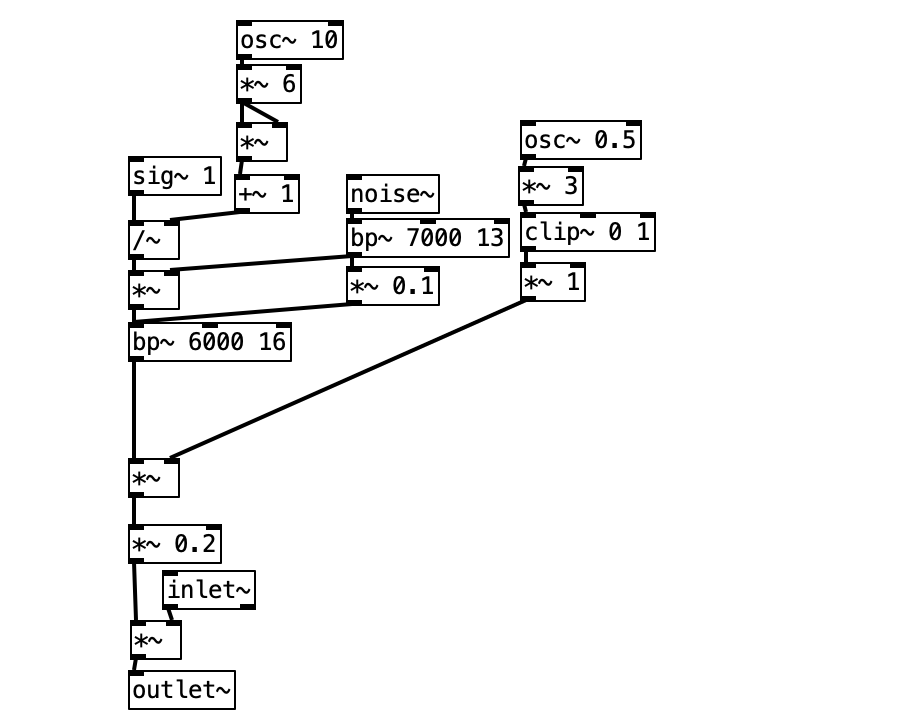
Farnell also explores a different approach to cicada sounds. Unlike the more rhythmic structure of cricket calls, cicada sounds often contain rapid, dense and complex high-frequency components. This requires a different synthesis approach. Noise, band-pass filtering and modulation can be used to construct a more continuous and textured buzzing sound. These examples helped me understand that different biological sounds require different synthesis strategies. Rather than using the same oscillator structure for every sound, it is more useful to consider the acoustic characteristics of each source and select appropriate synthesis techniques.
Chirper
A short, high-frequency chirping sound. I explored how repeated tonal events could create the impression of small biological calls.
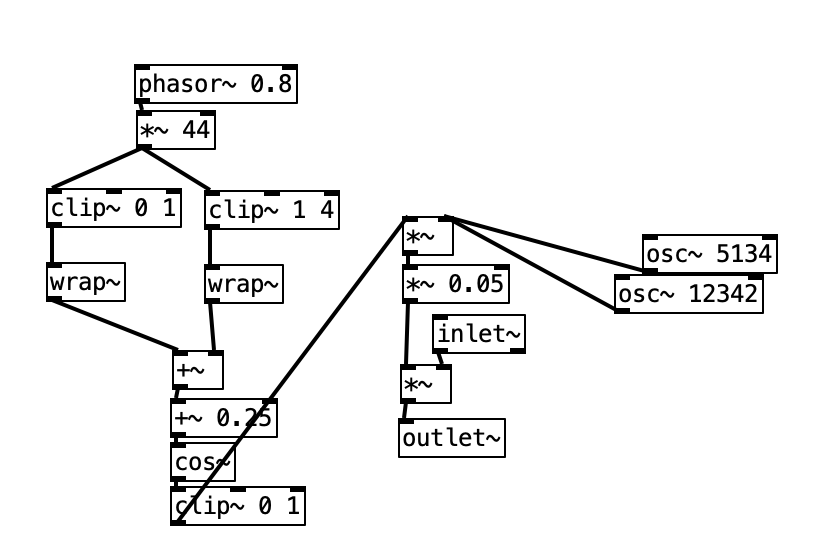
Cicada
A more continuous buzzing texture, exploring sustained high-frequency sounds and modulation.
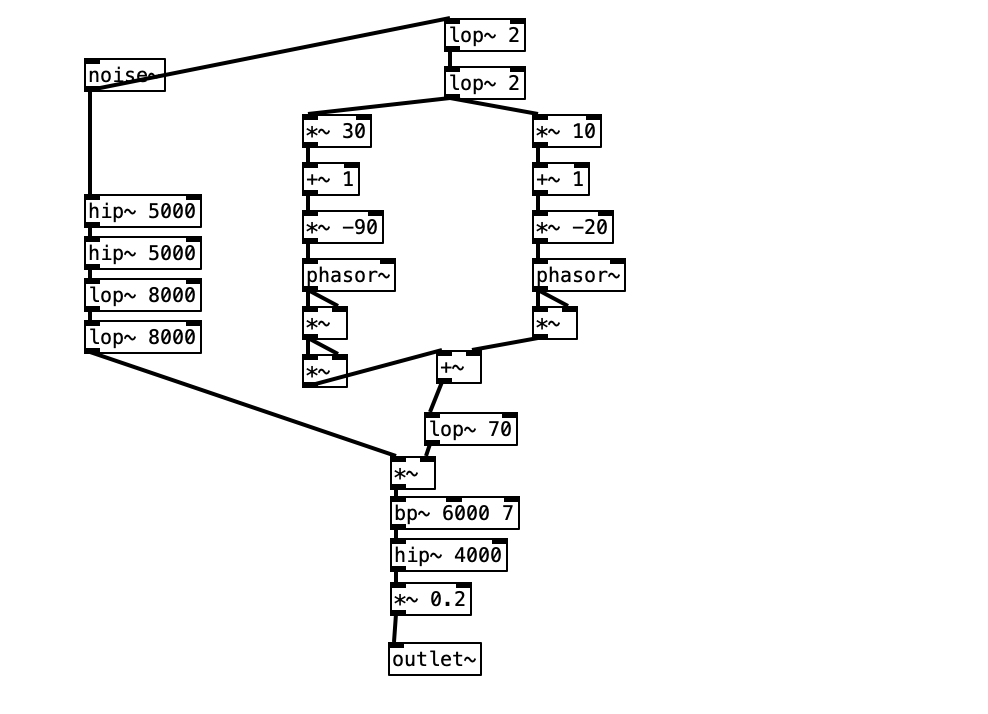
Cricket
A repetitive chirping sound characterised by distinct rhythmic pulses and intervals.
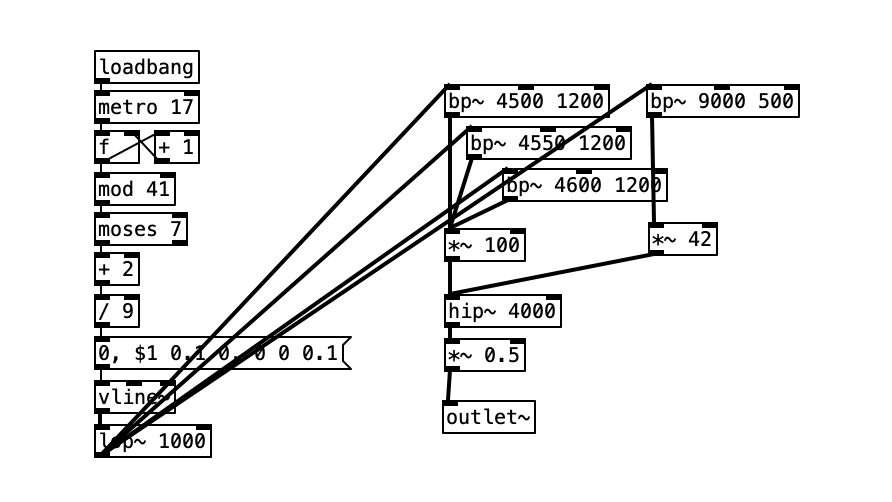
Frog
A lower-pitched biological vocalisation, providing a contrast to the higher-frequency insect sounds.
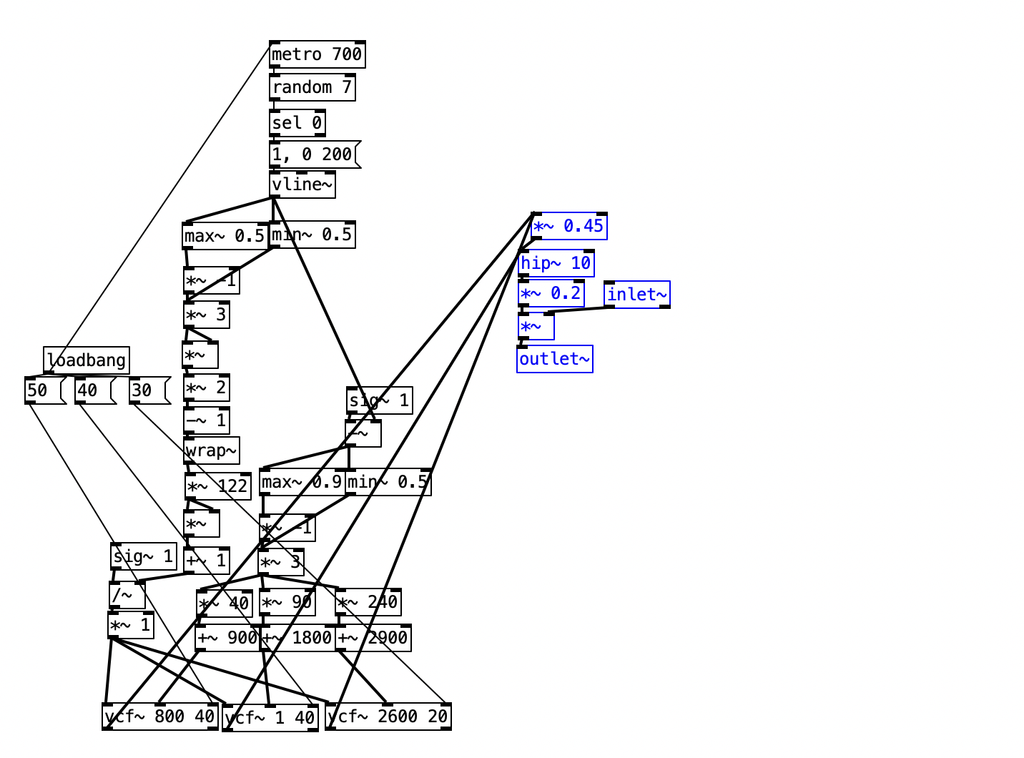
Rattler
A rattling sound with a more textured and repetitive character, adding another type of rhythmic activity to the system.
Each generator produces a different sonic character. I wanted to preserve these differences rather than make all five sounds behave in the same way.
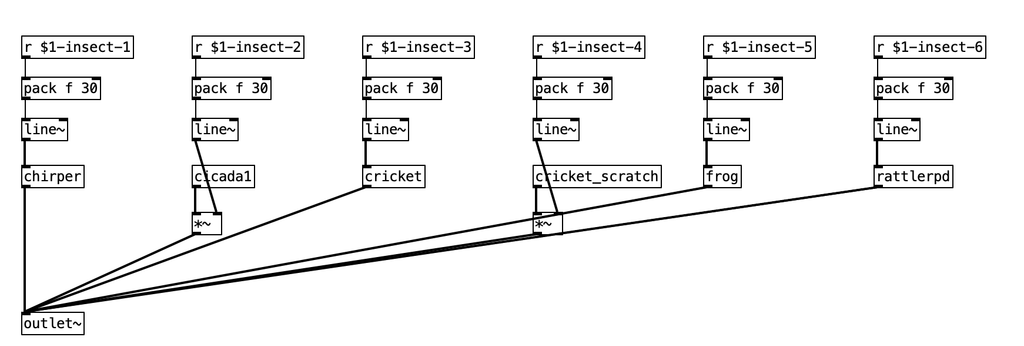
After developing the individual sound sources, I brought them together into one Pure Data patch. An important part of this stage was allowing the five generators to operate independently while also being able to play simultaneously. This created opportunities to experiment with different combinations of sounds.
For example, combining the continuous buzzing of the Cicada with the rhythmic chirping of the Cricket produced a denser environment. Adding the Frog and Rattler introduced contrasting frequencies and textures. By changing which generators were active, I could create different levels of biological activity and environmental density. This also made the patch more suitable for integration into my larger Nature Soundscape Synthesizer.
Leave a Reply
You must be logged in to post a comment.