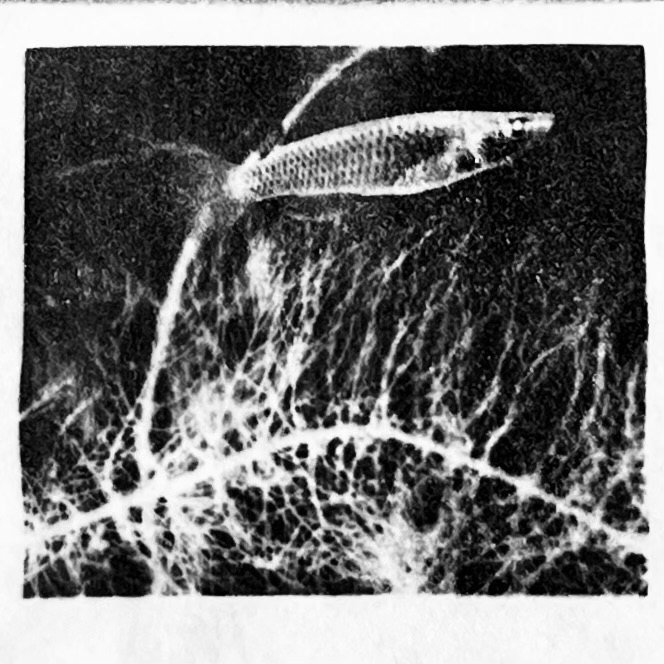
This week I continued experimenting with artificial environmental sound and became increasingly interested in the idea of authenticity in listening. As I developed more synthetic ambient textures, I noticed that some of the sounds I created felt surprisingly believable, even though they were produced entirely through synthesis and digital processing rather than traditional field recording.
This led me to question whether listeners identify “natural sound” because of its actual source, or because of familiar sonic characteristics that have become culturally associated with nature. During my experiments, relatively simple combinations of filtered noise, reverb, modulation, and spatial layering were enough to create impressions of wind, distant environmental movement, or atmospheric space. Even when I knew the sounds were artificial, they still produced a convincing sense of natural ambience.
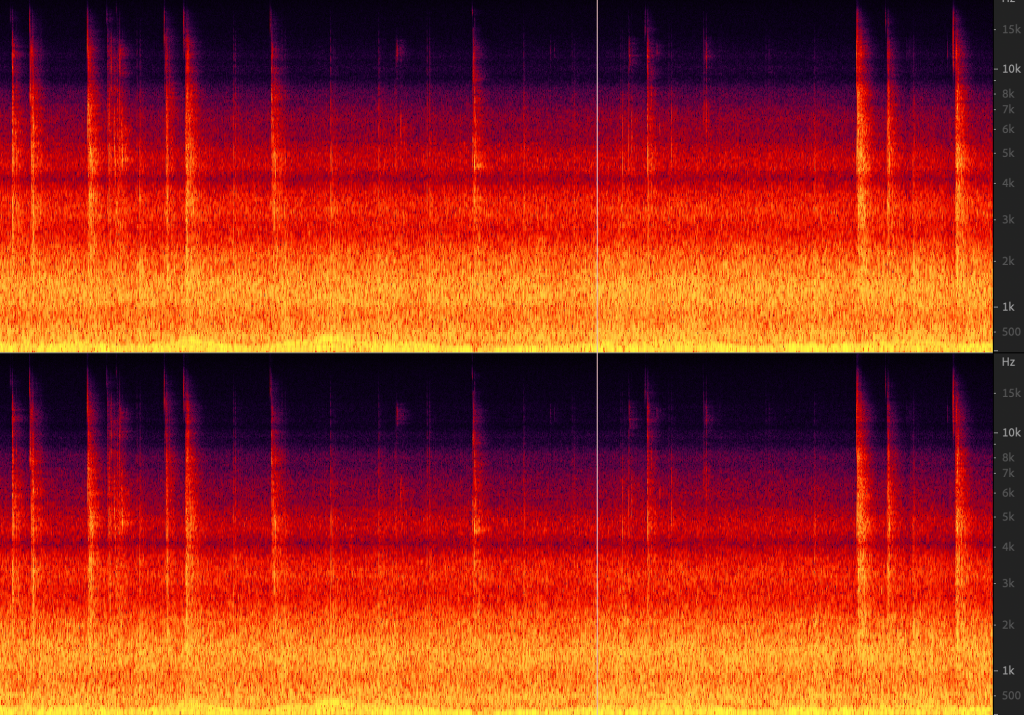
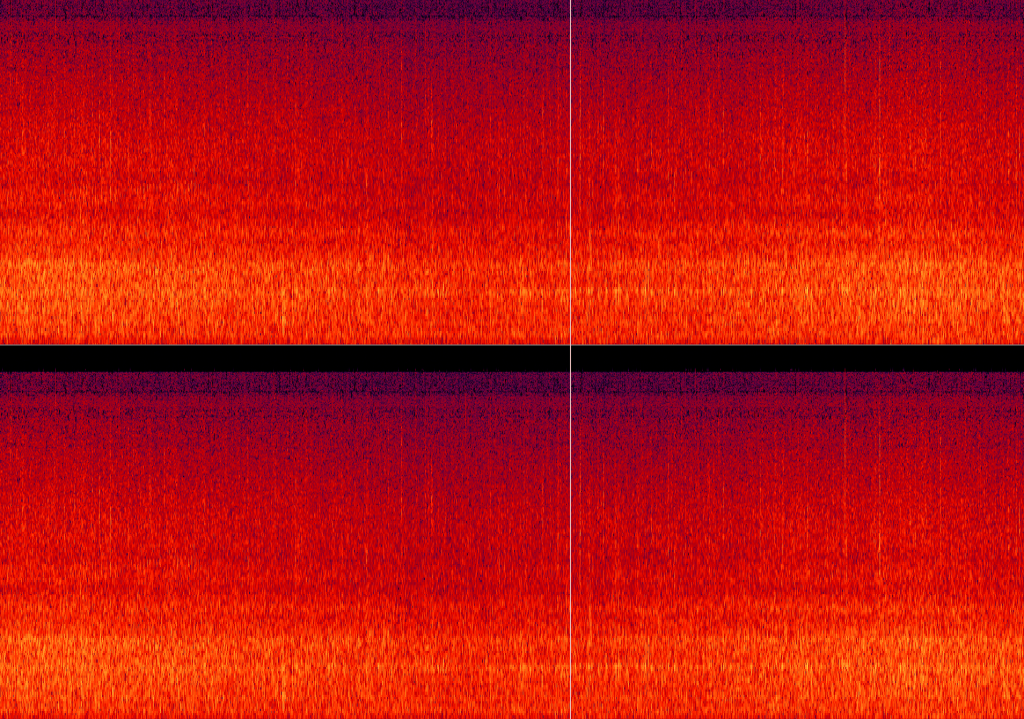
To explore this further, I compared spectral images of both a real environmental recording and a synthetic sound texture. Interestingly, the recording I initially assumed to be more “natural” was actually the synthetic one. The real environmental recording appeared visually flatter and more uniform, while the artificial version contained more dynamic spectral variation. This made me realise how strongly expectations influence the perception of naturalness.
Rather than identifying sound through its actual origin, listeners may respond more strongly to recognisable sonic patterns and aesthetic qualities. Certain textures — such as irregular movement, spatial depth, soft noise, and high-frequency detail — are commonly associated with natural environments through film, media, and sound art. If these qualities are reproduced artificially, the result may still feel authentic.
This experiment helped me understand authenticity as a perceptual and cultural effect rather than an objective truth. It also connects closely to ideas discussed by Mark P. Wright regarding mediation and realism in field recording. The project is therefore becoming less about imitating nature and more about examining how ideas of nature are constructed, recognised, and reinforced through sound and listening practices.
Leave a Reply
You must be logged in to post a comment.