In this animation project, my sound design is primarily built on realistic sound materials, including field recordings, Foley, and room tone. However, these sounds are not used to reproduce a realistic domestic environment. Instead, they are reorganised into a structured sound system that operates through emotional and psychological logic.
Rather than designing sound effects as functional representations of objects, I approach SFX as a method of emotional re-coding. This means that although the sonic material remains grounded in real-world recordings, its narrative function is transformed from physical realism into psychological interpretation.
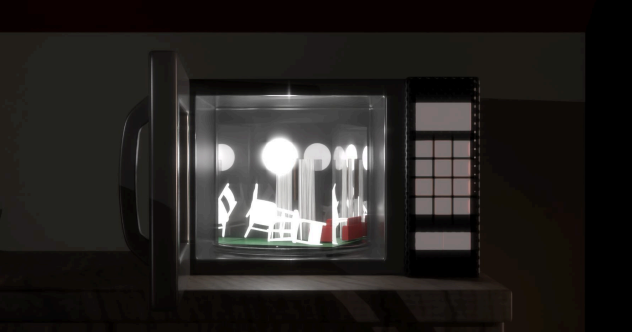
Each domestic object in the animation is treated as a sonic container with a specific emotional function.
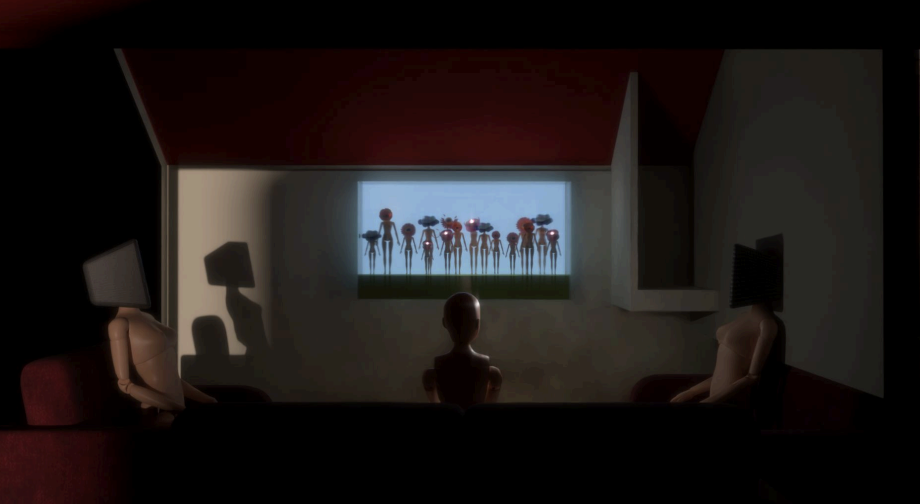
The television is constructed using layered real-world audio materials, including children playing in outdoor environments combined with fragmented sound textures. These sounds do not function as broadcast content, but instead simulate a sense of observed memory. In this system, the television becomes a site where external happiness is perceived rather than experienced directly.
In contrast, I introduced mechanical and repetitive monitoring-like sounds, such as electronic ticking and beeping sounds, which are associated with parental presence and surveillance. These sounds are not tied to a physical object on screen, but function as a structural layer that suggests control and observation within the domestic space.
The drawer is recorded using close-mic Foley techniques, emphasising proximity and compression. The resulting sound is spatially restricted, reinforcing the sensation of enclosed space and lack of privacy.
During the production process, I continuously tested different levels of abstraction. Early versions of the sound design leaned toward more experimental manipulation; however, this reduced clarity in relation to the visual narrative.
As a result, I reintroduced more recognisable realistic sonic elements to maintain balance between conceptual expression and communicative clarity. This iterative process was essential in ensuring that the sound design remained understandable within an interdisciplinary context.
The main challenge throughout this stage was negotiating between three factors: visual clarity, conceptual sound design, and realistic auditory grounding.
This stage of the project reinforced my understanding that realistic sound design is not limited to imitation or reproduction. Instead, realism can function as a flexible system that supports reinterpretation and emotional restructuring.
By re-coding everyday domestic sounds into psychological and memory-based structures, I transformed ordinary environments into fragmented sonic representations of lived experience. This process demonstrates how sound can operate simultaneously as documentation and interpretation within an interdisciplinary creative practice.
Leave a Reply
You must be logged in to post a comment.