
When I first started thinking about the topic for my audio paper, I wanted to explore “noise”—the everyday sounds that are ignored, chaotic, or harsh. But the more I thought about it, the more I realized that this topic was too abstract. It was hard to find a clear focus, and I couldn’t easily connect theory with practice.
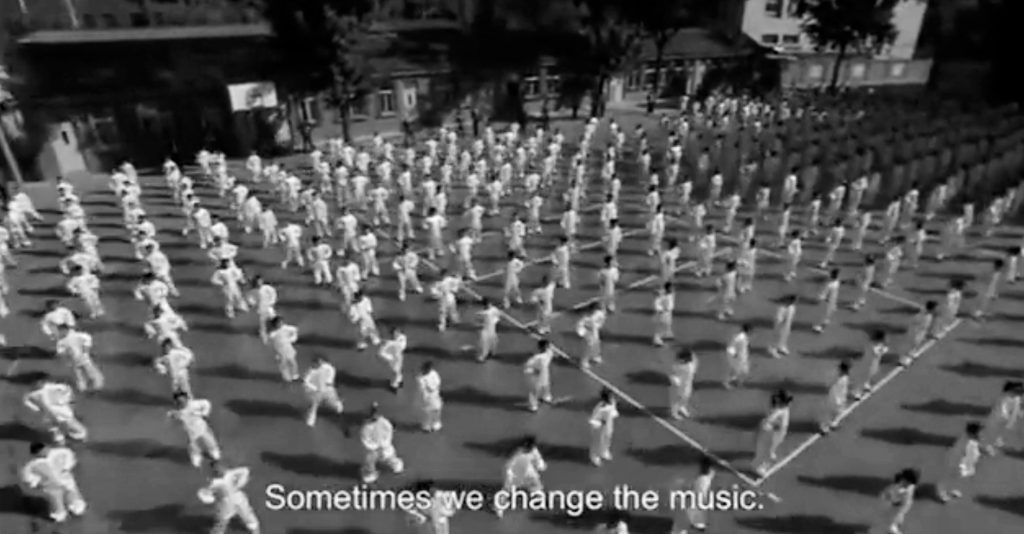
Then I began to reflect on what I really cared about. I realized that any research should be connected to my own experience and feelings. I remembered my school life, and the sound of broadcast gymnastics every morning on the playground. The neat and repetitive melody stayed in my memory. This personal experience made me realize that sound not only shapes body movements, but also influences perception and attention—it is an invisible form of discipline.
Every morning, the familiar commands came over the speakers: “One, two, three, four!” Along with lively music, students moved in unison, hands and feet following the rhythm. To outsiders, it might seem like just a daily exercise routine, but I began to wonder: while shaping body movements, does sound also shape behavior, attention, and perception?
Broadcast gymnastics originally came from Western physical exercise systems in the early 20th century, but its development in China has a unique social and educational context. In the 1950s, China began promoting broadcast gymnastics in schools, aiming to improve students’ physical fitness while also fostering collective awareness and discipline. Over time, it became a regular part of school life. Every morning, the coordinated movements and uniform music not only exercise the body but also create a visible and audible sense of order.
Leave a Reply