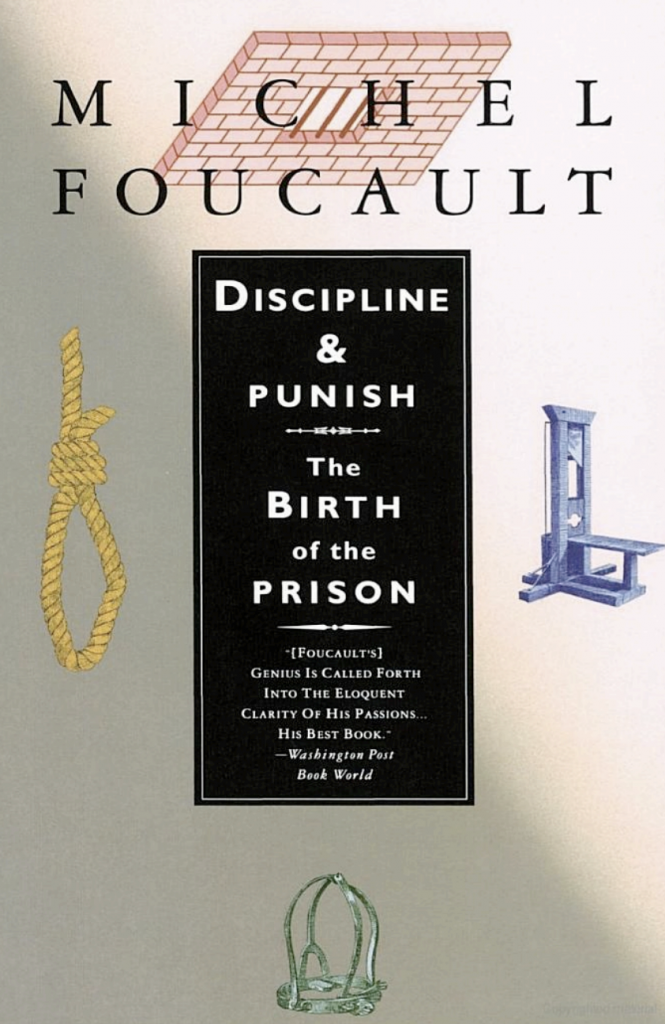
During my exploration of broadcast gymnastics, I found that Michel Foucault’s theory of discipline can explain this well. Foucault says: “Power is exercised rather than possessed; it circulates through techniques, practices, and routines that organize everyday life” (Discipline and Punish, 1977). This means power is not just directly imposed, but works slowly through daily actions, habits, and rules. The music and commands in broadcast gymnastics are an example of this “micro power”: the fixed rhythm and movements guide students into collective order, and discipline becomes part of their body and memory without them noticing.
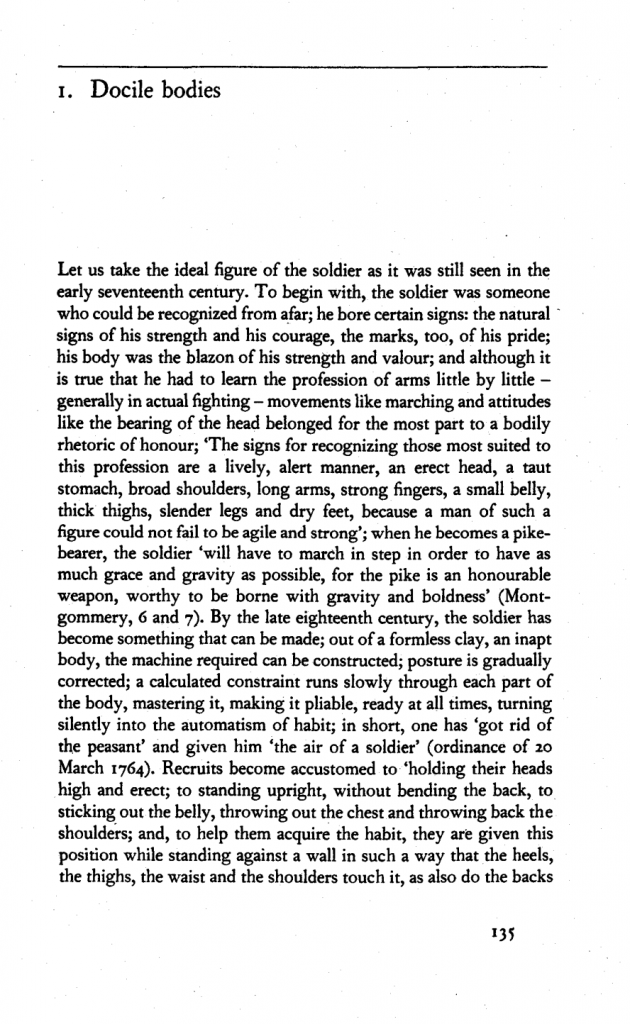
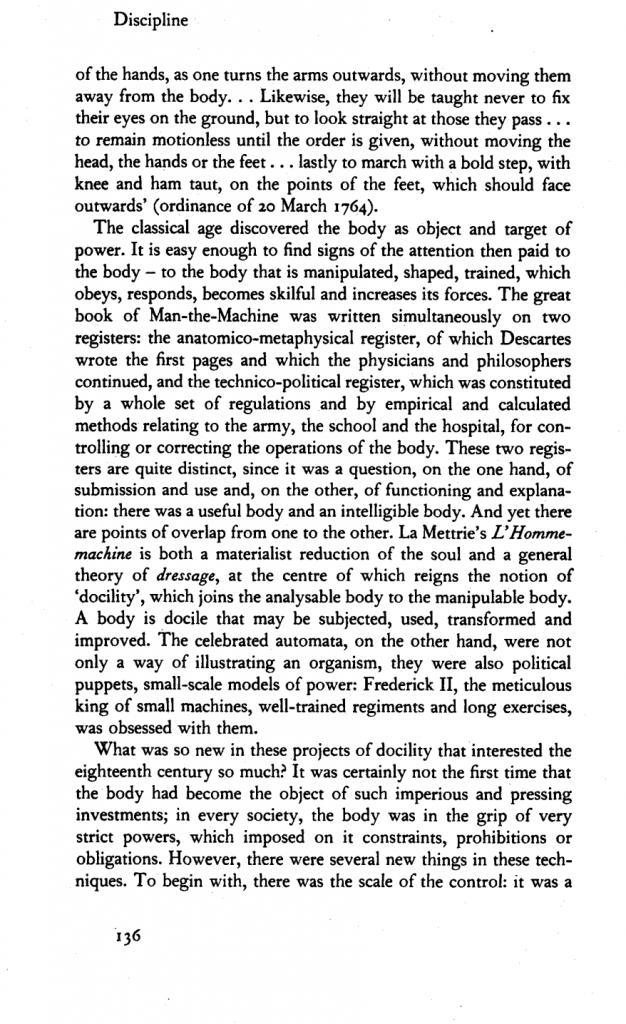
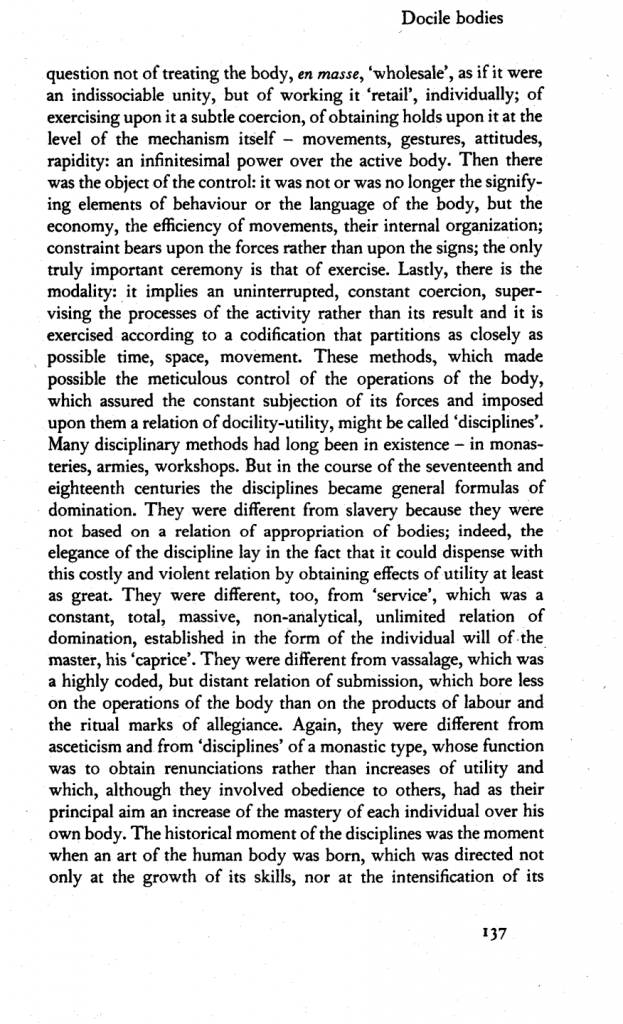
From another angle, Foucault’s idea of “docile bodies” shows how repeated exercises train and shape the body (Discipline and Punish, 1977, pp.135-137). In broadcast gymnastics, students follow music and commands, so they naturally move together and remember the rules. This shows how sound, rhythm, and routine act as tools of discipline, affecting not only behavior but also memory and social experience. From my own experience, the repeated melodies and movements of broadcast gymnastics leave strong memories, showing how sound and discipline are closely connected in education.
Leave a Reply